Tracing regulatory threads through mobile payment flows in variant poker bonus structures
Xander Franke · Aug 18, 2026
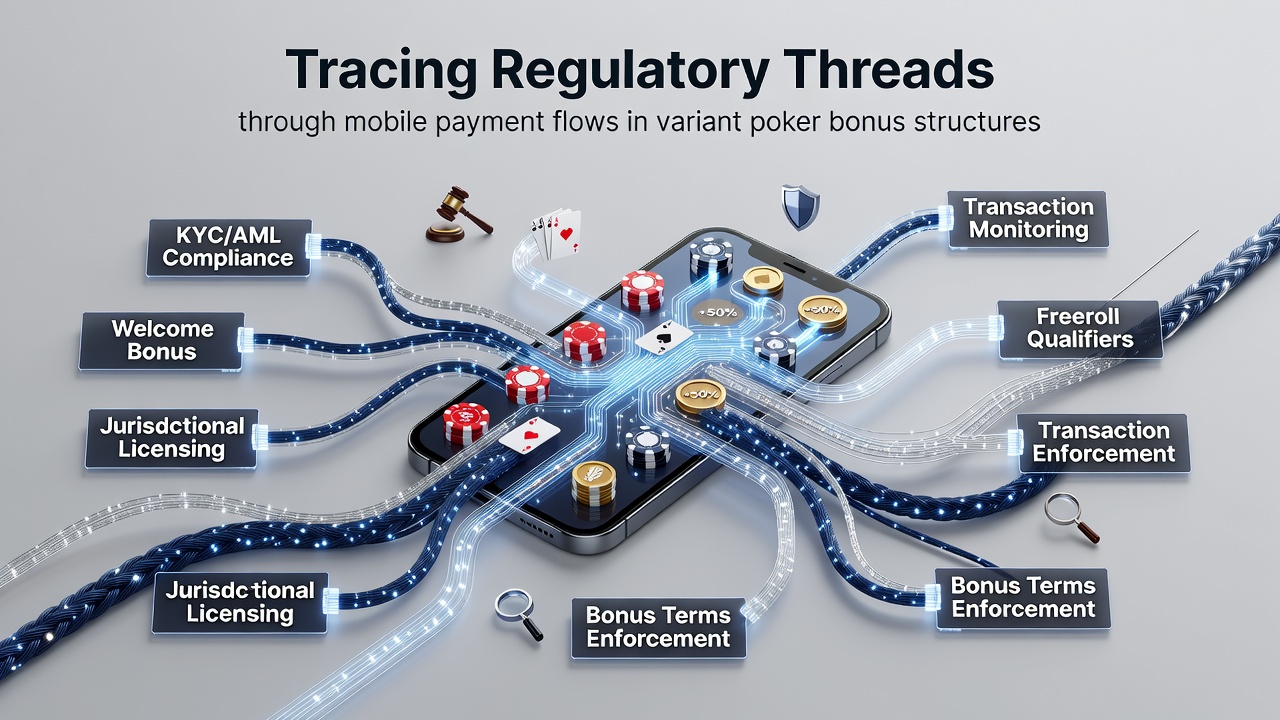
Tracing regulatory threads through mobile payment flows in variant poker bonus structures
Regulatory frameworks shape how mobile payments move through poker bonus structures across different game variants, and operators must map each transaction path to satisfy anti-money laundering rules along with know-your-customer requirements. Data from multiple jurisdictions shows that bonus funds in Texas Hold'em often follow direct deposit sequences while Omaha and Stud variants introduce layered distribution steps because of differing prize pool allocations. Observers note that payment processors integrate these sequences with real-time monitoring tools so that every credit and debit leaves an auditable trail back to the originating account.
Mobile payment architecture and bonus tracking
Payment flows begin when a player deposits funds via a mobile wallet or banking app, and the operator applies bonus credits according to variant-specific rules that regulators have pre-approved. In many markets, transaction records must include timestamps, device identifiers, and IP addresses so authorities can reconstruct the entire sequence if questions arise later. Research indicates that systems built around ISO 20022 messaging standards allow faster reconciliation between banks and gaming platforms, which reduces delays when bonus funds convert into withdrawable cash after playthrough conditions are met.
Operators segment bonus pools by game type because poker variants carry distinct risk profiles that affect how quickly funds can be released. Texas Hold'em bonuses typically clear faster than those attached to multi-round Omaha tournaments since the latter involve larger prize pools adn longer settlement windows. Figures from payment processors reveal that mobile-initiated transactions now account for more than sixty percent of all poker deposits in regulated markets, prompting supervisors to require additional verification layers at each step of the flow.
Variant-specific structures and compliance checkpoints
Each poker variant imposes unique bonus mechanics that intersect with regulatory checkpoints. Hold'em structures often apply percentage-based match bonuses that trigger immediate wallet updates, whereas Pot-Limit Omaha bonuses may use tiered release schedules tied to tournament milestones. Regulators examine these schedules to confirm that no funds bypass mandatory cooling-off periods or source-of-funds checks. Studies from academic researchers highlight that automated compliance engines now flag anomalies within seconds when a mobile payment attempts to bypass a required verification step.
August 2026 marks the scheduled rollout of enhanced cross-border payment reporting rules in several European jurisdictions, and these changes will require operators to transmit detailed bonus-flow data to central repositories within twenty-four hours of each transaction. Canadian provincial regulators have already aligned their technical specifications with similar timelines, creating a shared data exchange framework that covers both mobile deposits and bonus redemptions. Industry reports show that early adopters reduced reconciliation errors by thirty-eight percent after implementing the new messaging protocols.
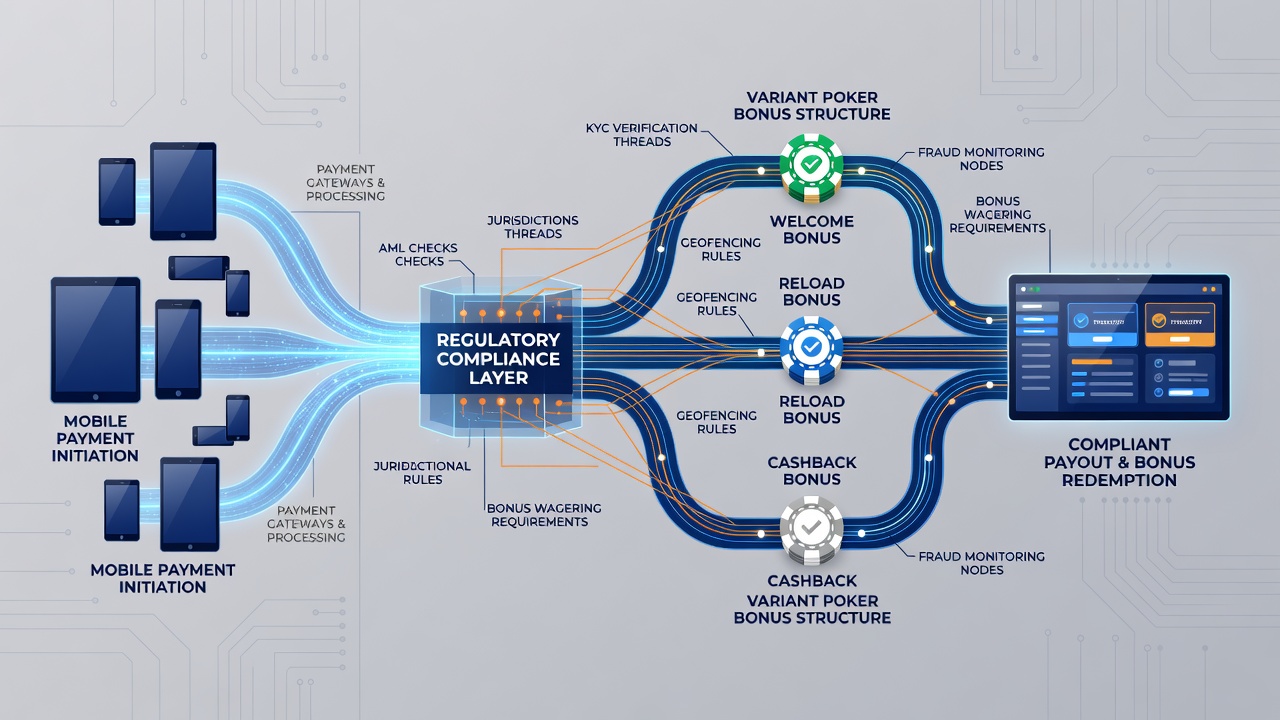
Cross-jurisdictional data exchange and audit trails
Supervisory bodies exchange information through secure channels that link mobile payment records with player activity logs. One documented case involved a multi-state investigation where regulators traced a series of Omaha bonus redemptions back to a single device that had triggered multiple deposit attempts within minutes. The audit trail exposed inconsistencies that led to account suspension and subsequent referral to financial intelligence units. Such cases demonstrate why every mobile transaction must carry immutable metadata that survives encryption and system migrations.
Payment service providers now embed regulatory tags directly into transaction packets so that bonus credits carry their origin data throughout the entire lifecycle. This approach satisfies both domestic and international reporting obligations without requiring manual intervention at each stage. Data from the Australian Transaction Reports and Analysis Centre indicates that tagged transactions improve detection rates for unusual bonus cycling patterns by more than forty percent compared with untagged flows.
Future technical standards and reporting obligations
Emerging standards for instant payment systems will require operators to expose bonus status APIs to regulators on demand, allowing real-time verification that funds have not been diverted outside approved channels. These APIs must handle variant-specific parameters such as tournament buy-in caps and satellite qualification bonuses. Observers note that testing environments already simulate August 2026 traffic volumes to confirm that latency remains below acceptable thresholds during peak hours.
Academic papers published by European research consortia describe machine-learning models that predict which bonus structures are most likely to attract layering attempts across mobile channels. The models incorporate historical transaction graphs from multiple poker variants and flag sequences that deviate from established player behavior baselines. Implementation of these models has begun in several markets where regulators accept automated alerts as supplementary evidence during routine examinations.
Conclusion
Regulatory threads running through mobile payment flows continue to tighten as variant poker bonus structures grow more complex. Operators that maintain comprehensive audit trails and integrate variant-specific compliance logic into their payment engines stay ahead of reporting deadlines. The coordinated rollout of enhanced data standards scheduled for August 2026 will further standardize how bonus funds move across borders while preserving the auditability that supervisors require.